




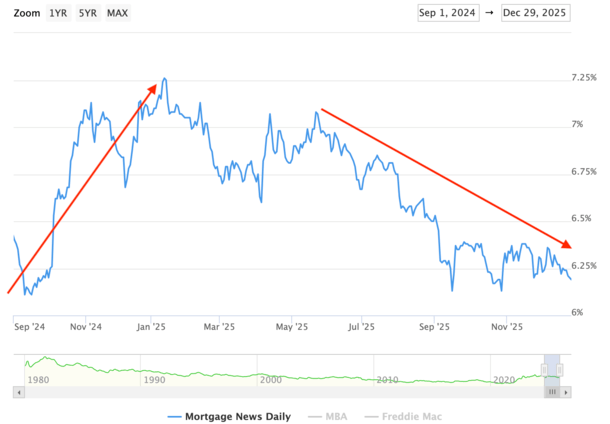
Mortgage rates have been a dominant story over the past few years, with a significant surge from record lows in 2021 to a staggering 8% by late 2023. However, since then, they have settled into the low-6% range, with the average rate not differing much from the previous year. As we head into 2026, there’s a positive trend emerging that didn’t exist in 2025 – the trajectory of mortgage rates is looking more favorable.
Everyone has been closely watching mortgage rates, which have risen dramatically but now seem to be stabilizing. The current average rate for a 30-year fixed mortgage is around 6.6%, according to Freddie Mac, which is only slightly lower than the 6.72% average in 2024.
This minimal difference might lead some to believe that nothing has changed, but a closer look reveals that the 30-year fixed actually hit a lower point in 2024, with a low of 6.08%, compared to 6.17% in 2025. Although the difference is not substantial, it’s still a lower rate, and this subtle change could have a significant impact on the housing market.
But what’s more important is the direction mortgage rates are heading into the new year. Unlike the start of 2025, when rates were rising, we’re now seeing a decline, with rates falling more than a full percentage point since their peak. This shift in momentum could be a game-changer for prospective home buyers and those looking to refinance their mortgages.
Mortgage Rates Hit a Lower Low Last Year
A review of the data from Freddie Mac reveals that the average 30-year fixed mortgage rate in 2024 was 6.72%, while the year-to-date average for 2025 is 6.60%. This difference of less than an eighth of a percentage point may seem insignificant, but it’s essential to consider the context of mortgage rate fluctuations.
At the same time, it’s worth noting that the 30-year fixed mortgage rate actually reached a lower point in 2024, with a low of 6.08%, compared to 6.17% in 2025. This nuanced difference could have a substantial impact on the housing market, particularly for first-time home buyers and those looking to refinance their mortgages.
The trajectory of mortgage rates is a crucial factor to consider when evaluating the current state of the housing market. With rates falling instead of rising, we may see a significant shift in the market, particularly if rates breach the 6% threshold.
But Mortgage Rates Are Falling Into the New Year
A review of the mortgage rate chart from MND reveals that despite the similar averages, the trend lately has been more favorable. Mortgage rates hit a low point in September 2024, before surging higher due to a hot jobs report and the impact of Trump becoming the frontrunner in the presidential election.
Since then, mortgage rates have been on a downward trend, falling more than a full percentage point. This shift in momentum could be a significant factor in the housing market, particularly if rates continue to fall and breach the 6% threshold.
Mortgage Rates Are Hovering Near 3-Year Lows
The start of 2025 was marked by a surge in mortgage rates, but the start of 2026 could be marked by sub-6% rates. This would be a huge psychological shift for prospective home buyers and could boost mortgage refinance volume.
Even if the difference in monthly payment is negligible, the outlook improves when mortgage rates are falling instead of rising. The thought of rates stabilizing and not jumping back toward the 7s provides some peace of mind that the worst could be behind us.
This would also be a boon to home builders, who will feel more confident building more homes if they believe affordability is finally getting better. So while mortgage rates might not look all that different if you use a zoomed-out average, momentum might be the key change today.
If and when mortgage rates do breach that key 6% threshold, we’ll likely see more would-be buyers (and sellers) come to market. This could boost home sales and get us closer to a normal, balanced housing market, something we’ve all craved for a long, long time.

Before creating this site, I worked as an account executive for a wholesale mortgage lender in Los Angeles. My hands-on experience in the early 2000s inspired me to begin writing about mortgages 19 years ago to help prospective (and existing) home buyers better navigate the home loan process. Follow me on X for hot takes.