



The iconic movie i, Robot starring Will Smith, which premiered in 2004, depicted a futuristic world where humans coexisted with highly intelligent humanoid robots. At the time, this concept seemed like the stuff of science fiction, but fast forward to today, and we’re on the cusp of a robot revolution that will transform our daily lives. The speed at which this revolution is approaching will likely catch many off guard, and it won’t be driven by the increasing presence of robots in factories or restaurants, but rather by the emergence of robots that resemble humans.
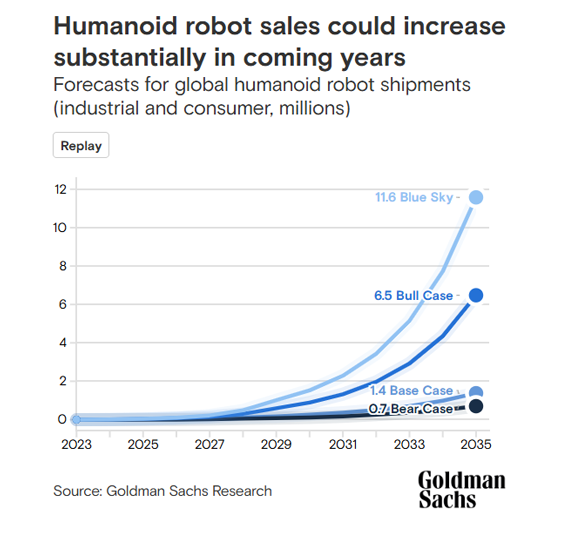
According to recent research by Goldman Sachs, the market for humanoid robots is growing at an unprecedented rate, with an expected 1.4 million units shipped by 2035, surpassing initial predictions by four times. This surge is largely attributed to advancements in artificial intelligence, which have enabled robots to learn tasks without extensive programming, allowing them to work outside of factories and adapt to new situations more quickly.
How Will Humanoid Robots Reshape the Next Decade?
The cost of building these robots is also decreasing rapidly, with prices dropping by 40% in just one year, making them more accessible for industrial and consumer use. Companies like Honda, Toyota, BMW, Volkswagen, and Hyundai are already utilizing humanoid robots in their manufacturing plants for tasks such as assembly and inspection, with over 250,000 units expected to be shipped by 2030.

The real growth, however, is anticipated in the consumer market, where robots for personal use could arrive 2-4 years sooner than expected, with annual sales projected to exceed one million units within the next decade. As AI continues to advance, domestic robots will become increasingly functional, taking over complex household chores like cooking, laundry, and lawn care, and potentially even managing home security and scheduling appointments.
With the potential market size for humanoid robots estimated to reach $139 billion by 2035, companies like Tesla, Boston Dynamics, and Figure AI are poised to play significant roles in this emerging industry. As an investor, it’s essential to keep a close eye on these developments, as the humanoid robot market is expected to experience a 50% compound annual growth rate, making it an attractive opportunity for those looking to get in on the ground floor.
Here’s My Take
Naturally, the domestication of AI-driven robots raises moral and ethical concerns, but from an investment perspective, the potential returns are substantial. With Elon Musk predicting that Tesla’s Optimus robot could generate over $10 trillion in revenue, and Figure AI reportedly seeking $1.5 billion in funding, valuing the company at nearly $40 billion, it’s clear that this industry is on the cusp of something big.

As we move forward into this new era of humanoid robots, it’s essential to stay informed and adapt to the changing landscape. With the potential for these robots to transform our daily lives, it’s an exciting time for investors and consumers alike.
Regards,

Ian King
Chief Strategist, Banyan Hill Publishing