




The bitcoin price in 2025 was shaped by macroeconomic forces, rather than speculative excess, resulting in a more mature and stable market. This shift is evident in the price action, which was influenced by factors such as ETF inflows, regulatory clarity, and broader market trends.
The bitcoin price experienced significant fluctuations throughout the year, with a rally above $126,000 during mid-to-late-year advances fueled by optimism around U.S. regulatory clarity and ETF inflows. However, the price failed to sustain these highs, and by the fourth quarter, tighter financial conditions and elevated real yields weighed on risk assets, causing the bitcoin price to slide sharply and end the year near $87,000.
Despite the decline, long-term charts reveal a more bullish story, with bitcoin’s yearly lows continuing to trend higher. Data shows that the yearly low rose from $366 in 2016 to $76,329 in 2025, with each major cycle setting a higher floor despite deep drawdowns along the way.
This pattern has held true after major downturns in 2018 and 2022, with bitcoin later establishing higher yearly lows. The 2025 low stands well above prior cycle troughs, even after a volatile year, indicating a maturing market with deeper capital support. Long-term holders have shown greater willingness to accumulate during declines, and forced selling has remained concentrated during brief liquidation events rather than extended crashes.
The gap between yearly highs and lows widened in 2025, reflecting persistent volatility and rapid shifts in sentiment. However, this also highlights a market still adjusting to its growing size and popularity, with analysts suggesting that the rising floor indicates a more stable and resilient market.
Macro conditions played a central role throughout the year, with inflation remaining sticky and central banks keeping policy restrictive longer than expected. This backdrop favored yield-bearing assets and pressured speculative positioning, resulting in the bitcoin price’s correlation with broader risk markets increasing. Price movements tracked equities more closely, especially during U.S. trading hours, with crypto assets often selling off while American stocks were open.
However, this pattern showed signs of shifting as 2026 began, with the bitcoin price climbing above $90,000 during early U.S. trading sessions. This shift in sentiment may be indicative of a changing market landscape, with bitcoin becoming more integrated into global markets and subject to broader economic trends.
October 10: Bitcoin price’s humbling ‘down to earth’ moment
The defining moment of 2025 came on October 10, when the bitcoin price suffered a massive and sharp intraday plunge of roughly $12,000, triggering billions of dollars in liquidations across derivatives markets. This selloff set the stage for a prolonged pullback that is still being felt in the broader crypto market.
Within weeks, bitcoin was trading more than 30% below its peak near $126,000, erasing much of the optimism that had dominated forecasts at the start of the year. Entering 2025, price targets were aggressive, with many analysts and executives expecting a sustained breakout well beyond prior highs. However, these expectations failed to materialize, with ETF demand absorbing supply but not sparking reflexive rallies.
Liquidity conditions remained tight, and leverage repeatedly capped upside moves. By year-end, the gap between forecasts and realized prices was clear, with bitcoin closing far below even the more conservative projections made earlier in the year. Despite this, the yearly lows chart should attract attention and comforting thoughts, as it reflects a maturing market with a rising floor.
The steady yearly lows indicate that bitcoin is larger, more regulated, and more integrated into global markets than during prior cycles. This structure may limit explosive rallies but also reduce the risk of total collapse. The data suggests one clear trend: even in a year marked by sharp corrections and unmet expectations, the bitcoin price’s long-term floor will continue to rise.
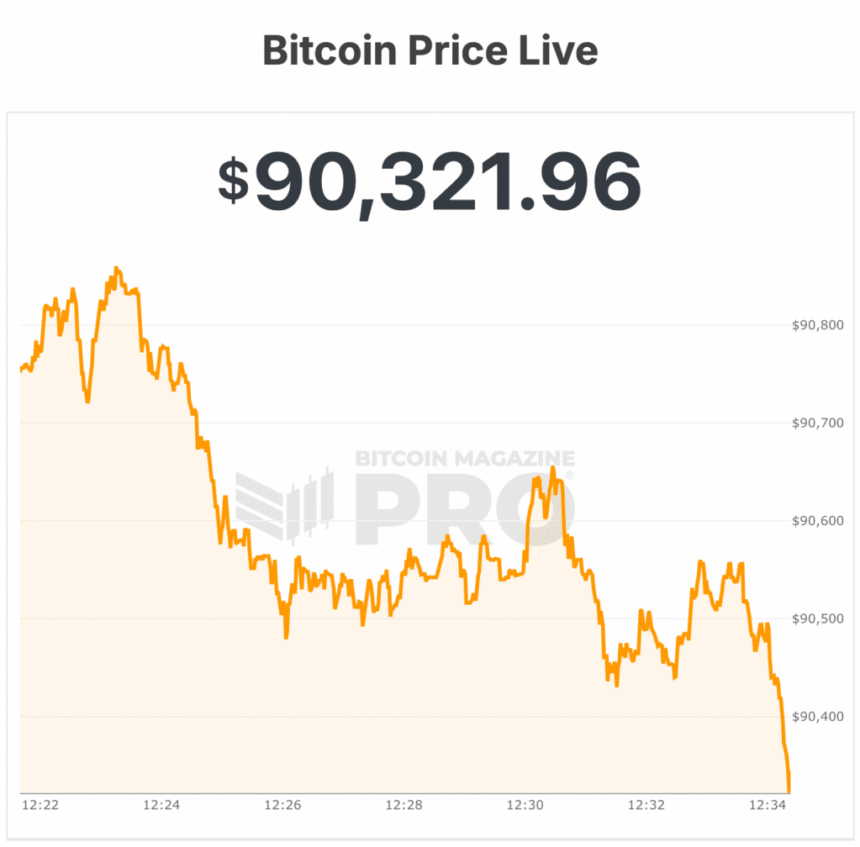
Currently, the bitcoin price is trading at $90,321, up 3% in the past 24 hours, with a market cap of $1.81 trillion and a 24-hour volume of $46 billion. Its price is near its 7-day high of $90,789 and 3% above its 7-day low of $87,967, with 19.97 million BTC in circulation out of a 21 million max supply.